

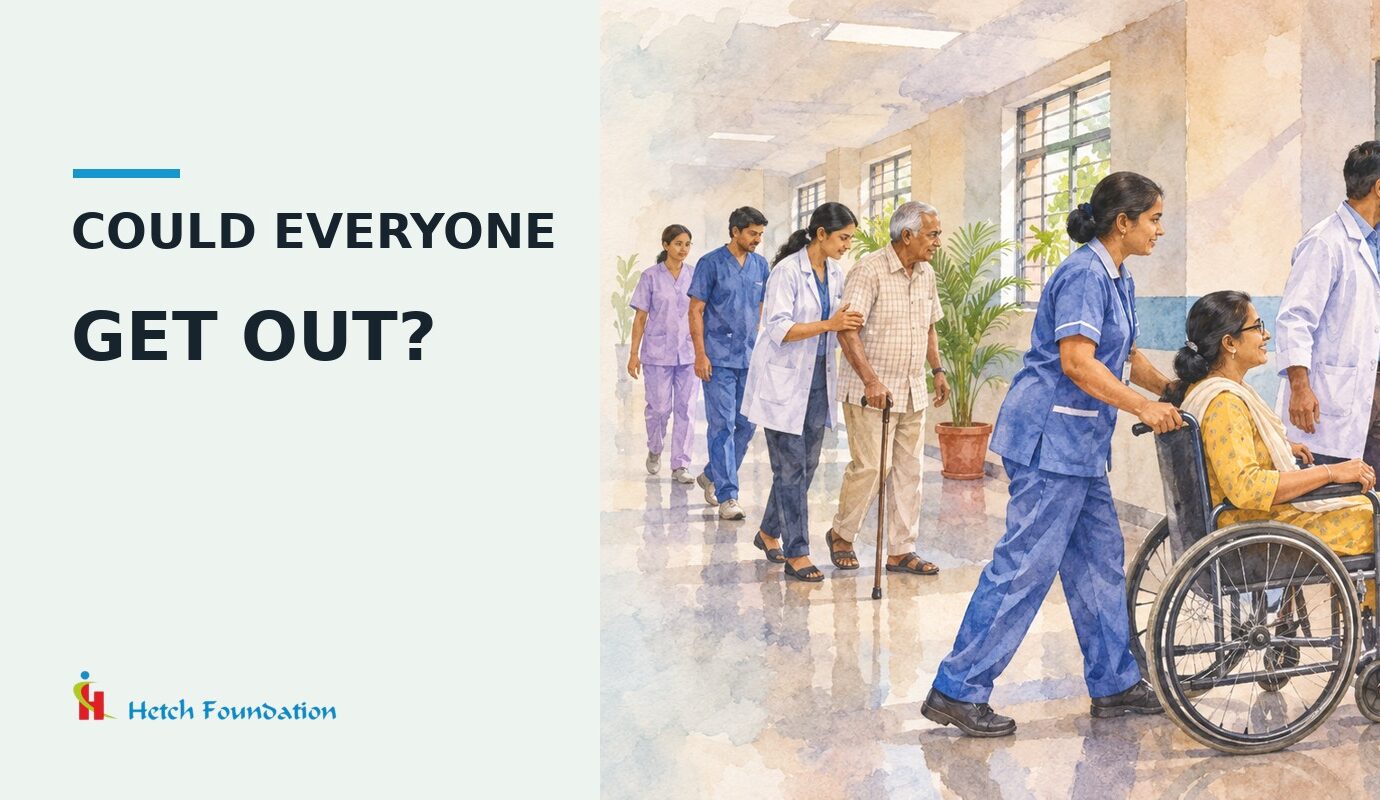
Could Everyone Get Out? A Fire Drill for Clinics and Care Homes
At a clinic, a fire alarm can sound while one person is being examined, another is waiting for a wheelchair and a third has just arrived without a companion. In a care home, some residents may be asleep or depend on staff to understand the alarm. A drill gives the team a chance to see how the facility’s approved plan works with the people and staffing it actually has. Management should design the exercise with appropriate clinical, facilities and fire safety professionals, so the rehearsal helps staff learn without putting patients or residents at risk.
Begin with the facility’s approved fire plan
Review the plan with the people responsible for fire safety and clinical or resident care. Confirm how alarms and internal notifications work, who contacts emergency services and who leads the response on each shift. Identify the approved routes, any designated protected areas, and places where responders can reach the facility. Obtain competent advice on how the building is designed to be used in an emergency. The sequence for moving people may depend on the facility, its fire protection measures and the instructions given by incident responders.
Walk the routes before the drill. Check that corridors and exits are clear, the signage is visible and the team can explain what to do if a route cannot be used. Ask the relevant specialist what equipment staff are trained and authorised to use for assisted movement. The practice should follow the facility plan, including arrangements for lifts and other equipment. If the plan is unclear, resolve that issue before rehearsing a step that could harm somebody.
Include people who need different kinds of assistance
People may need help because of limited mobility, difficulty hearing an alarm, low vision, confusion, language barriers or dependence on medical support. Some needs may be temporary. A patient arriving on crutches or recovering from a procedure may need assistance even if they usually move independently. Ask clinical or care staff how the facility records relevant needs and makes them available to the people responsible for evacuation. Keep this information private and share it with staff who need it to provide safe assistance.
Plan how staff will communicate clearly under pressure. A spoken instruction may need to be repeated, written down or conveyed by a person who can communicate with the resident. A companion can sometimes support the person with their agreement and under staff direction. In a drill, use staff acting as occupants or other agreed simulations when involving real patients would be inappropriate. Test whether the staff member can find the equipment, assistance or information they need without losing contact with the response lead.
Assign roles to the people actually on duty
Make roles clear for typically busy times and reduced staffing. Identify who receives and confirms an alarm according to the plan, who calls emergency services, who supports the movement of patients and who accounts for occupants. Appoint backups for essential roles. Consider how visiting clinicians, contractors and temporary staff learn who is directing the response. A night team needs a plan based on the people actually present and a direct way to call for more help. Daytime staffing should not be silently assumed in an overnight exercise.
Use an appropriate rehearsal scenario. One version might simulate a route that is already unavailable and ask the team to explain how they would follow the approved alternative. Another might focus on what happens at a shift handover. Agree how to signal that the drill is a simulation and how to stop it if real clinical needs arise. Avoid creating real smoke, locking exits or making actual emergency calls as part of a routine drill unless that exercise has been explicitly coordinated with the relevant authorities and facility management.
Account for people after a move
Give one person responsibility for recording who has moved and who remains to be accounted for. Decide how information from treatment rooms, waiting areas and staff spaces will reach that person. Keep the emergency team informed if someone cannot be accounted for. Do not ask untrained people to re-enter an unsafe area to look for a missing person. Let the incident lead and professional responders manage the situation. Plan how to maintain necessary care as directed by clinical staff and how to communicate with carers without circulating private medical details.
Review whether the agreed safe locations have enough space, are reachable and preserve access for responders. Consider what is needed to keep essential records available during disruption. Separate information about where people are from instructions about what they need clinically. Share it appropriately. A short handover can state the person’s location, the responsible staff member and any urgent assistance that must be arranged by the clinical team.
After the rehearsal, ask newer staff what was difficult to recognise. A door name or route that is obvious to a long-serving employee can be unfamiliar to somebody covering a shift. Use their feedback to improve signs and orientation before testing again.
Give every action a named owner and confirm how management will check that it was completed before closing the drill record.
One habit before the next drill
Walk one route with the staff member who would actually use it on a lower-staffed shift. Ask where they would find the approved procedure, how they would reach their backup and what they would do if their first route was unusable. Record one practical improvement, give it an owner and set a date to check that it has been made. After the exercise, do the same for any problem the team encountered.
Frequently asked questions
Should patients take part in every drill?
Decide with responsible clinical and safety staff. Simulations can test arrangements without disrupting care or moving someone who should remain in place.
Can one practice cover every shift?
Check staffing, access and available help on all shifts. Use additional discussion, walkthroughs or drills where conditions differ.
What should a visitor do if the alarm sounds?
Follow the facility’s instructions and staff directions. Tell staff if you or someone near you needs assistance, and keep routes and responder access clear.