

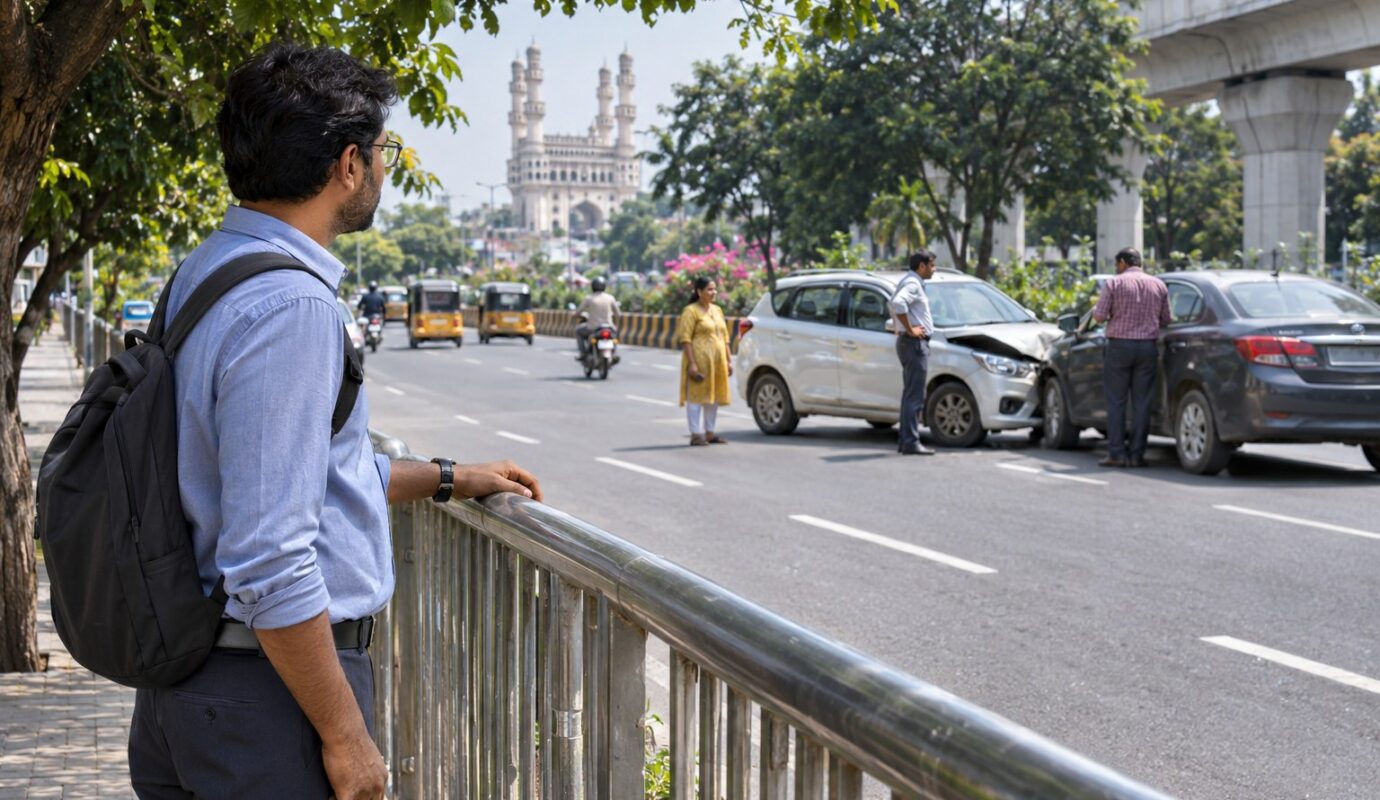
Check for Danger Before You Approach a Road Crash
The urge to run toward someone who is hurt is understandable. Chapter 11 of HarGhar Se EkSainik asks the ordinary person at the scene to become useful. That starts with noticing whether reaching the person would expose you to another collision. A helper who is injured cannot continue helping.
Look at the space between you and the incident
Stay out of moving traffic. Notice blind bends, fast vehicles, smoke, leaking fuel, unstable vehicles and fallen cables. Do not enter a hazardous area or attempt a rescue that requires specialist equipment. Call 112 in India from a safe place and describe the danger as well as the incident. Follow the operator’s directions.
Choose a safe role
You may be able to give an accurate location, alert a nearby responsible person or show responders a safe entrance without approaching the casualty. Nobody needs to stand in a live lane or use their body to stop vehicles. Hazard lights are a warning aid; they do not turn a dangerous stopping place into a safe one.
Practise the decision before the emergency
On your next familiar journey, think about safe stopping places and clear landmarks. This is preparation, not an invitation to stop on unsafe shoulders. Discuss it with the people you travel with. The first question is simple: can I help from here without creating another emergency?
Reference: Red Cross first-aid steps.
About the book
This original article is inspired by Chapter 11, “The Knowledge That Saves Lives,” in HarGhar Se EkSainik by Syed Abdul Hakeem, Chairman of Hetch Foundation. The chapter brings the movement’s concern for every waiting family into emergency preparedness, responsible first response and practical learning. Explore the Chapter 10 appeal and learn more through Hetch Foundation.