

The Five Minutes We Try to Save
By Hetch Foundation
You are leaving home five minutes later than you planned. The navigation app shows a slow stretch near the market, then a clear road beside a bus stop. The temptation is to make up time on that clear stretch. You know the route. You have driven it for years. But you do not know whether a bus is about to pull away or someone is about to come around it to cross the road.
Being late creates a problem that belongs to the clock. Speed moves that problem into a road shared with people who have their own journeys. You can decide how to handle a late arrival. You cannot decide what will appear in front of the car, how much grip the road will offer or how quickly someone else can get out of the way. That is where the choice about speed matters.
The fastest part of a trip is only one part of it
Think about a short city commute. It includes reversing out of a parking spot, waiting at a signal, following a bus, taking a turn, and finding somewhere to park. A stretch where you can accelerate may be only a small part of the trip. If the next signal is red or a queue has formed, getting to it sooner can simply mean waiting there longer.
A late commuter often feels the minutes most sharply when there is finally a gap ahead. That is also when inattentive speeding can creep in. The road looks open, the vehicle feels stable and the driver is thinking about the next appointment. Watch for the change in the street as you leave an open stretch and approach places where people are likely to cross, such as a market, school gate or bus stop. Give yourself time to adjust before you arrive there.
More speed uses up more of the road ahead
A vehicle continues moving while you notice a problem and decide what to do. At a higher speed, it travels farther over the same period. That distance has already been used up by the time braking starts. The vehicle then needs additional space to slow or stop. The distance depends on speed and road conditions, as well as the grip of the tyres and the state of the vehicle.
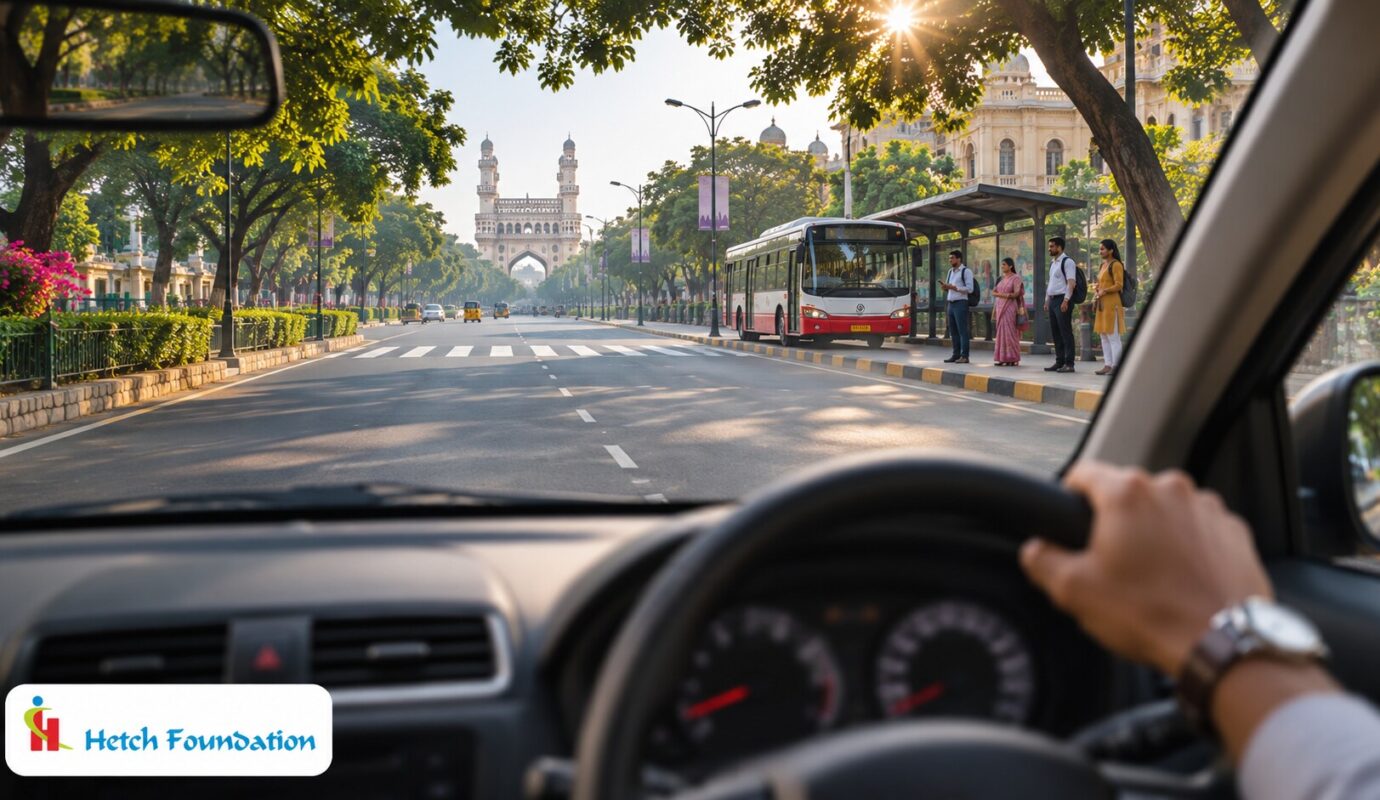
Picture the delivery van outside the market. From behind the wheel, you can see its back doors and the lane beside it. A person beyond the van can be hidden completely until they step into view. Your ability to stop now depends on how much road remains between you and that person. Slowing as you approach the hidden area creates more time to notice movement and respond. If the road is wet or the visibility is poor, you need to adjust even earlier.
Speed also changes the outcome if a collision happens. A person on foot or on a bicycle has little between their body and the vehicle. Lower speeds give the driver a better chance of avoiding the collision and can reduce the severity of injury if one occurs. That is especially important in places where people need to cross throughout the day and where their pace and mobility vary.
Decide how you will handle being late
Before moving, send an update if someone is waiting for you. Tell them you are delayed and will confirm when you arrive. Give yourself permission to adjust the appointment or accept a late arrival. If the delay develops while driving, let a passenger send the message or wait until you can pull over somewhere safe and lawful. A small change to a plan takes the pressure off the next kilometre.
Use posted limits and adjust to what is happening around you. A legal maximum may be too fast for a specific stretch when the view is blocked, traffic is mixing, or rain has reduced visibility. Approach bends, crossings and stopped buses at a speed that gives you time to respond within the road you can see. Keep extra space when vehicles ahead can stop suddenly. Let an impatient driver behind you set their own pace while you stay predictable and keep enough room in front.
If you ride a scooter, the pressure can show up in smaller decisions. You might try to move through a shrinking gap before the signal changes or accelerate past a line of slowing vehicles. Before doing either, ask what you can see beyond the gap. A slower approach lets you notice a pedestrian or a vehicle turning across your route. On a trip you make regularly, identify the two or three places where you will ease off before the risk comes into view.
Streets and schedules set the pace too
The same road can feel like a fast route to someone driving through and a local street to someone crossing from a bus stop to a clinic. The layout should help both people understand what to expect. Road authorities can assess visibility, lighting, crossing placement and the speeds people actually drive. Depending on the site, changes such as a well-designed raised crossing, a shorter crossing distance or a clearer transition into a busy area can support safer speeds.
Workplaces have a role when they set schedules for drivers, field staff or deliveries. A route plan that assumes everything goes smoothly leaves little room for school traffic, rain or loading delays. A realistic arrival window and a way to report delays give staff room to make safe decisions. Families can do the same by agreeing that anyone running late should send an update when they can do so safely and take the time the trip requires.
Two questions people often ask
What if everyone else is driving faster than I am?
Keep to a lawful speed that suits the conditions. Stay predictable, signal in good time and leave space in front. If you need to move aside, do it when the road layout and traffic allow a safe and lawful manoeuvre. The distance you can see and the traffic around you remain your best guides.
How do I stop rushing on a route I drive every day?
Notice which part of your trip tends to run over time. It may be getting out of the house, a long signal cycle or finding parking at the destination. Build the extra time around that part. Then choose one place where you will deliberately ease off, such as the approach to the market crossing. A decision made before you leave is easier to act on when you feel hurried.
On your next trip, see where the pressure to make up time first appears. Acknowledge the delay, plan how to communicate it, and give the road ahead the space and attention it needs.