

How to Buy a Helmet That Fits
By Hetch Foundation
The first helmet you pick up in a shop might look exactly right. The visor is clear, the finish matches your scooter and the price is within budget. Then you put it on. It presses hard against one temple, yet moves freely when you turn your head. The same size in another model might feel completely different. That few minutes in front of the shop mirror can tell you more than a size label or a product photo.
For a daily rider, a helmet is something you put on and take off dozens of times a week. A good purchase has to work in that routine. Start with a helmet certified for motorcycle use in India, then check the fit, fastening and visibility on the person who will wear it. Use the same approach for a passenger’s helmet. Their head shape and size may be different from yours, even if you can share jackets or gloves.
Check the mark before comparing features
Look for the BIS Standard Mark, often called the ISI mark, and the licence number on the helmet. The Indian standard for protective helmets for two-wheeler riders is IS 4151. Ask the seller to show you where the marking appears on the actual helmet you intend to buy. If you are shopping online, check the product information and inspect the delivered helmet before using it. A listing photograph can show a different model, size or production run from the one in the box.
Use the licence verification feature in the BIS Care app to check the licence details and compare them with the manufacturer and product information. If the details are missing or do not match, ask the seller to clarify and choose another verified helmet if you cannot resolve it. Keep the receipt and manufacturer instructions. They make it easier to follow up if the strap, visor or another part develops a problem.
Check what the model protects as well as whether it meets the standard. A full-face design includes a chin bar and gives more coverage around the face than an open-face design. Try the visor and ventilation controls at the shop. Pick a configuration you can use correctly in the conditions you actually ride in, including rain, bright sunlight and trips after dark. Check that your normal spectacles fit comfortably if you need them to ride.
Start with a measurement, then try it on
Use a soft measuring tape to measure around the fullest part of your head, around the forehead above the eyebrows and around the back of the head. Compare that measurement with the manufacturer’s chart for the model you are trying. The chart gives you a starting size. The shape of the helmet’s interior affects how that size sits on you, so be prepared to try another model if the first one feels uneven.
Put the helmet on level and check how it sits across your forehead, temples and the back of your head. You should feel even, snug contact. Give yourself several minutes to notice any pressure that builds in one spot. A helmet that starts to hurt around your forehead or temples while you are standing still is unlikely to be comfortable during a commute. A helmet that shifts easily or feels loose around the crown needs a different size or shape.
With the strap secured, gently move the shell side to side. Your scalp and, in a full-face helmet, your cheeks should move with the lining. If the shell rotates easily on its own or slides down to obscure your view, try a better fit. Ask an experienced fitter to help check whether the helmet can roll forward off the back of your head with the strap fastened. If it can come off or moves so far that it blocks your view, keep trying other options. Carry out these checks while stationary.
Fasten the strap the way you will on the road
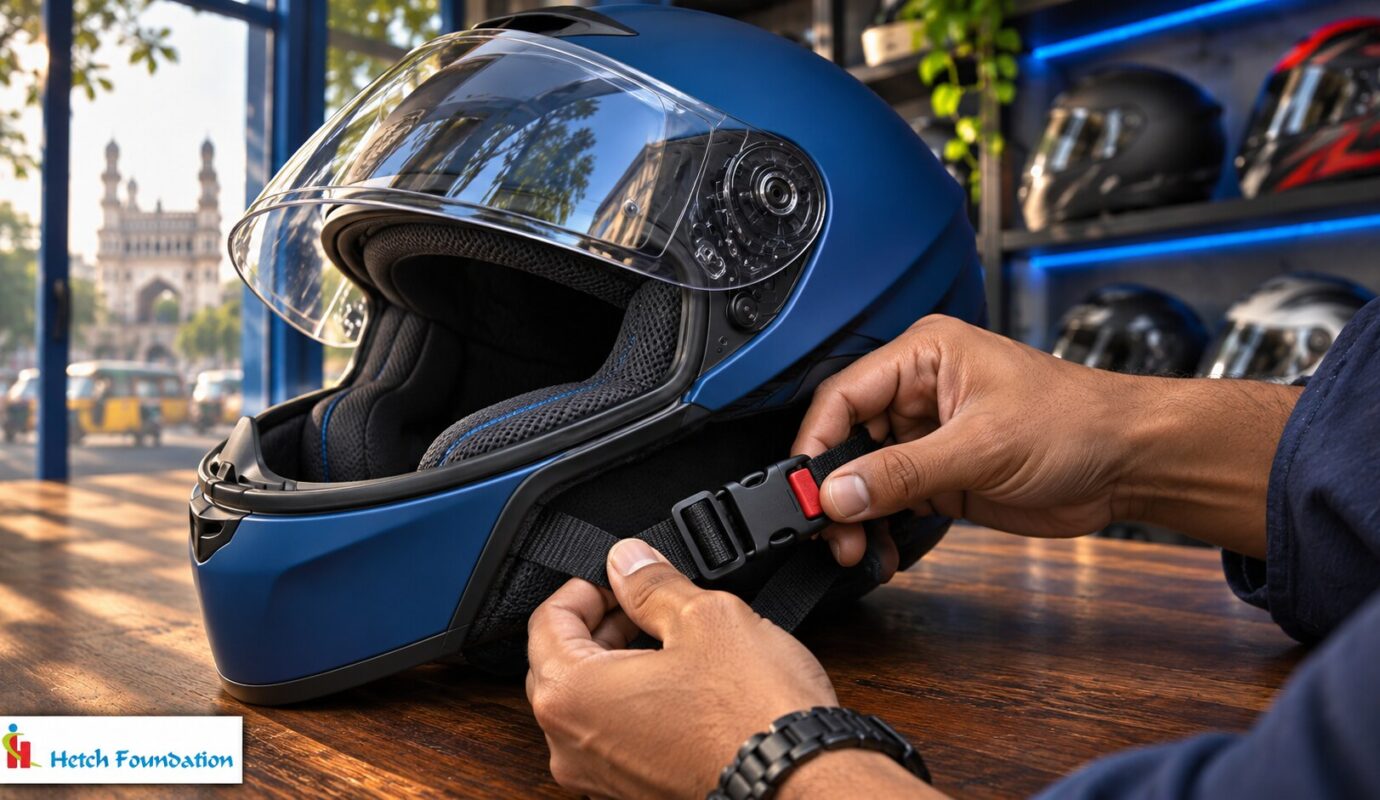
Learn how to close and release your model’s buckle before leaving the shop. Use the manufacturer’s instructions to adjust the strap so it sits securely under your chin. It should be snug enough to keep the helmet in position without making swallowing or breathing uncomfortable. A fastener should close properly, and the strap should stay adjusted when you give it a gentle tug. Try it a few times yourself. This is a check you will need to repeat on every trip.
Now look straight ahead and to each side. Move your head as you would to check for traffic at an intersection. Make sure the rim, visor and any eyewear allow a clear view. A scratched or heavily tinted visor can make it harder to see in poor light. Check the view with the visor down and learn which visor the manufacturer recommends for your riding conditions. If you buy online, do these checks indoors while the return option still applies.
Give every rider their own fit
Think about a household with one scooter and several riders. It is tempting to leave a single spare helmet by the door so anyone can take it. That arrangement helps only if the helmet fits the person who reaches for it. When an adult passenger borrows an oversized helmet, tightening the chin strap cannot make up for a shell and liner that move around their head. Take regular passengers along when shopping so they can try their own sizes and practise using the buckle.
Make wearing the helmet the first step of leaving. Keep it where you pick up your keys and give passengers time to fasten theirs before the scooter moves. That small habit also helps on short errands, when there is a stronger temptation to leave protection at home. Families who occasionally lend their scooter can make the same check before handing over the keys.
Two questions people often ask
Can I keep using a helmet after a crash if it looks fine?
Replace a helmet that took an impact in a crash. Its protective liner can be compressed or damaged where you cannot see it. If a helmet has been dropped or you are unsure about its history, consult the manufacturer’s instructions or ask the manufacturer directly. A second-hand helmet with an unknown history makes that decision harder because you cannot establish what happened before it reached you.
What if the right size still feels uncomfortable?
Try a different model in the same size range. Some fit a rounder head and others fit a longer head shape. Ask the seller whether the manufacturer provides optional pads made for that model. Avoid cutting, drilling or compressing the liner to make it fit. If two people will use the helmet, check the fit on each person separately before making a decision.
Before your next purchase, take measurements for each regular rider and passenger, bring the spectacles you ride with and allow enough time to try more than one model. Leave the shop with a helmet you have verified, fastened and checked for yourself. Those few minutes give you a routine you can repeat every time you get on the scooter.